

04/11/2026
As a growing number of EU countries fret to enact social media restrictions, the EU Commission is asking them to wait for the EU-wide approach provided by the planned EU KIDS Act.
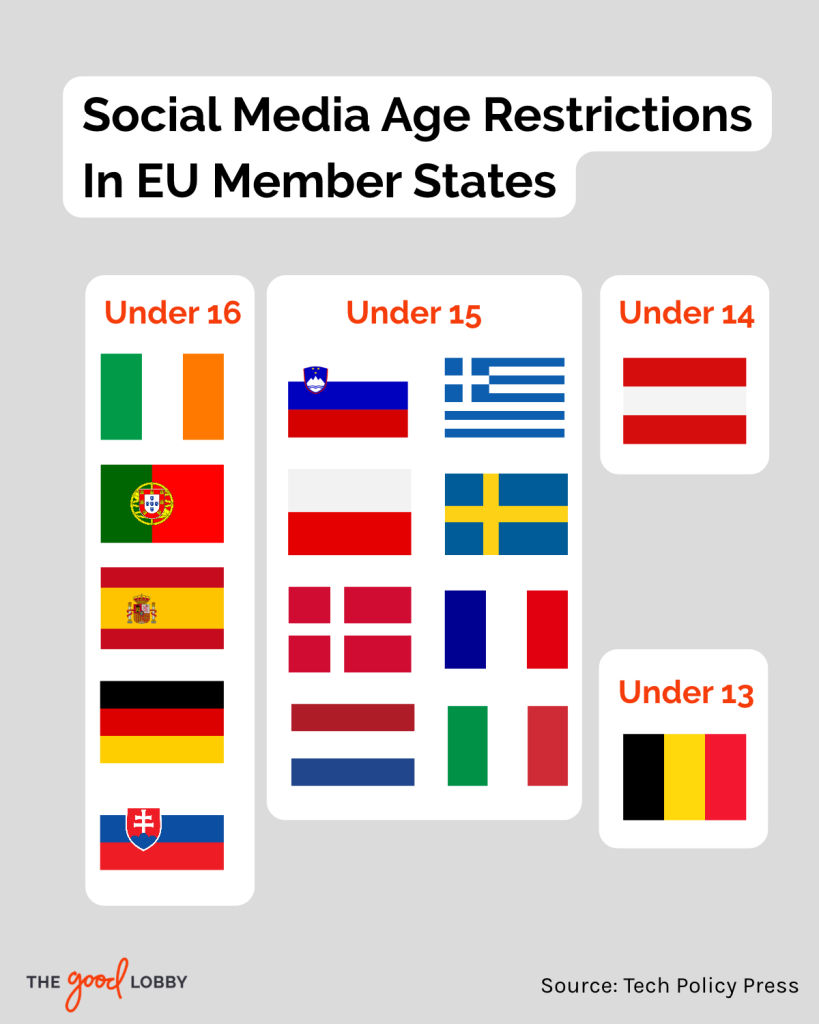
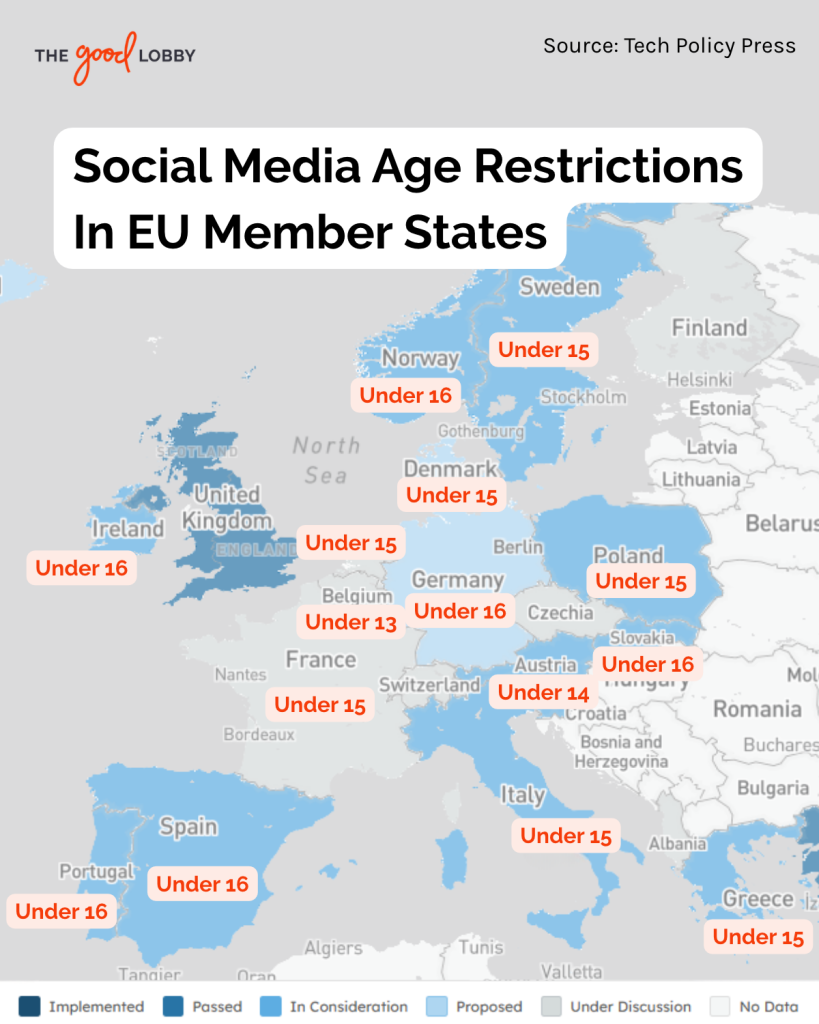
On 29 October, the Commission froze Austria’s plan to ban under-14s from platforms such as TikTok and Instagram for 12 months. Brussels says national rules that overlap with the planned EU KIDS Act should wait, to avoid a patchwork of different age limits across the EU.
The KIDS Act, presented on 17 September, would set one framework for all 27 member states. Under-13s would have no accounts. 13- and 14-year-olds would get parent-managed “mini accounts” with limited features and – similar to China’s approach – one hour a day. From 15, teens could open their own accounts. A self-declared birthdate would no longer be enough, and platforms would need certified age verification.
Austria is the first country whose regulatory proposal got a red card from the EU. France did get one but by its own Constitutional Court.
Austria sent its draft to Brussels at the end of July under the EU’s notification procedure, which normally blocks adoption for three months while the Commission reviews it. The Commission presented the KIDS Act on 17 September, while that window was still open, and on 29 October it used its power to extend the wait to 12 months when EU legislation on the same subject is on the table. Vienna therefore can’t adopt the ban before late July 2027.
France and Greece escape the freeze because their review periods had already ended before the KIDS Act appeared. Austrian officials have contested the EU Commission’s warning Vice-Chancellor Andreas Babler said protecting children “does not deserve a delay,” and State Secretary Alexander Pröll called it unacceptable for Brussels to block national laws before supplying an EU-wide framework . Greece and France fall outside the freeze, because the consulative processesover their proposed rules ended before the KIDS Act appeared. Greece adopted its under-15 ban on 23 October. France is on its second attempt, since its Constitutional Council struck down the first version in August as a disproportionate restriction on minors’ freedom of expression.
The question beneath the question
Whether age limits are the right tool remains disputed among public health experts and policymakers. Children’s rights groups fear that restricting access will cut young people off from connection and information, while digital rights groups worry that age checks could mean verifying everyone. The proposal expands intrusive age verification and pays little attention to children’s own rights to information and participation. Others, like Missing Children Europe, welcomed the gradual approach but stressed that platforms have to still be held accountable and the rules enforced.
Another critical dimension of the ongoing EU legislative framework has to do with the process followed for its adoption. The the proposal skipped the impact assessment and stakeholder consultation normally expected for EU legislation. It also skipped the stakeholder consultation normally required in the preparation of any new EU initiative. This led youth organisations to argue that the people most affected by this regulation have been partially or fully excluded from its preparation. If the rules are meant to protect young people – they argue -, young people should help shape them.
Use the window
The proposal now goes to the European Parliament and the Council, under the leadership of the Irish government, as Ireland, holder of the Council presidency.
As it intends to move quickly, also to prevent a proliferation of national initiatives, here’s what citizens can do to make a difference:
- Answer the Commissions’ feedback call before 26 November. All responses will be summarised and passed to Parliament and Council to inform the legislative debate.
- Ask your government how it will consult young people before it takes a position in Council. Spain opened its own public consultation on the EU KIDS Act.
- Write to your MEP with a specific ask. Ask what evidence they will rely on, given there was no full impact assessment. Ask them to keep addictive-design rules for all users in the Digital Fairness Act, and to write children’s rights to information and participation into the text. The file is 2026/0286(COD).
- Back the groups already doing the work. EDRi co-authored an op-ed signed by 31 youth organisations and activists, who say they are the people these “protective” measures target. They ask for strict enforcement of the Digital Services Act and an ambitious Digital Fairness Act that protects everyone from exploitative design, whatever their age. EDRi member D3 in Portugal has brought the first class-action lawsuits of their kind in the EU against Facebook, Instagram, TikTok and YouTube over addictive design. In Austria, epicenter.works has called for a European solution while warning that the technical implementation could bring in a real-name requirement.